
Geology & ground stability
The rock and soil beneath a property shape its drainage, foundations and how the ground moves — including the shrink–swell behaviour that drives most subsidence claims.
What lies beneath a property is easy to overlook and expensive to get wrong. The geology controls how well the ground drains (which matters for soakaways and SuDS), how stable the foundations are, and how the ground moves with the seasons. A screening summarises the openly published geology so you understand the ground before you buy or build.
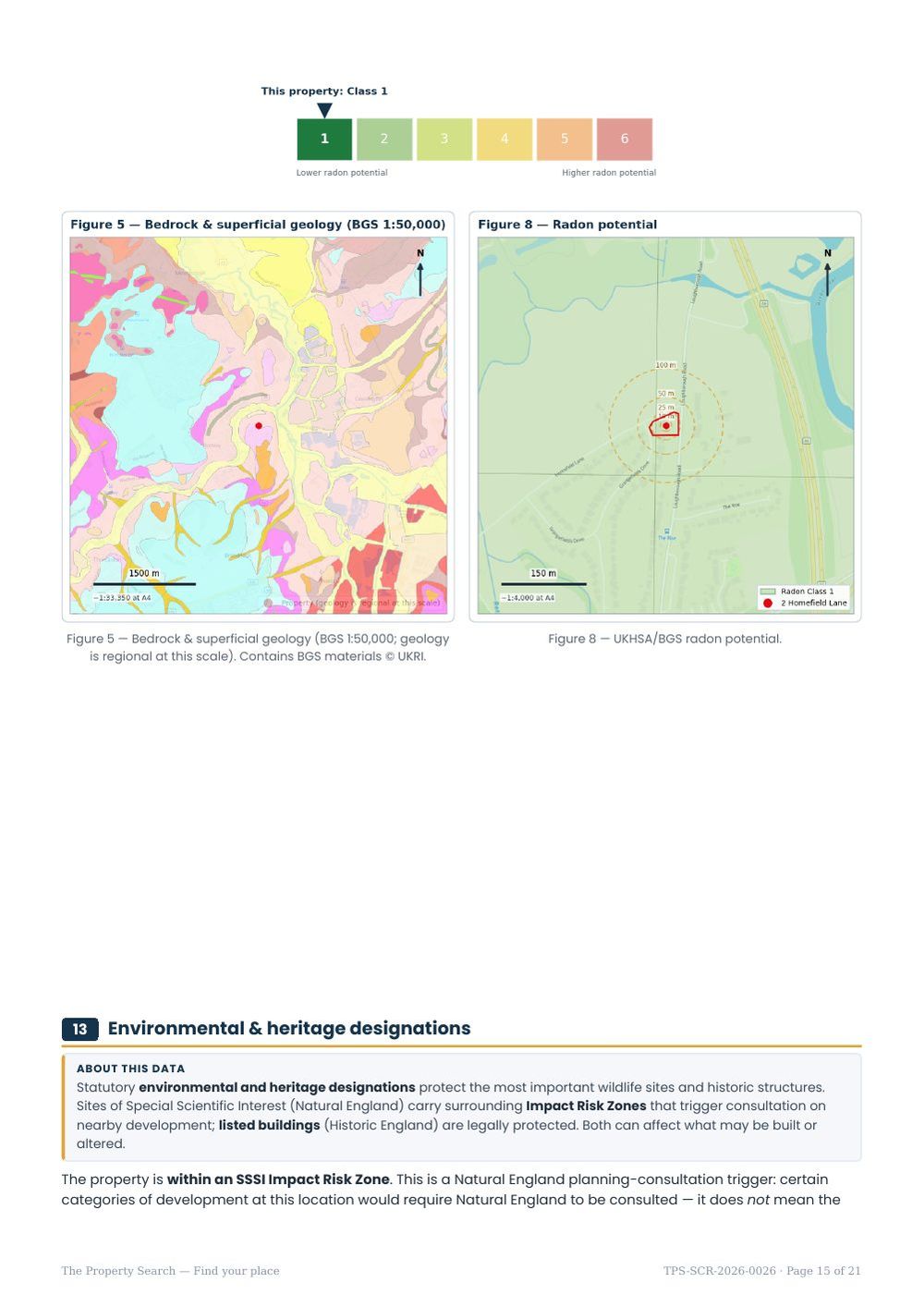
The British Geological Survey (BGS) describes the bedrock (the solid rock at depth) and any superficial deposits (younger material such as clay, sand or alluvium near the surface) beneath a property. These affect drainage, foundations and ground movement.
Bedrock and superficial deposits
We report the mapped bedrock and any superficial deposits at your address. This is genuinely useful context: mudstone bedrock, for example, drains poorly, which affects whether a soakaway will work and whether sustainable drainage needs to discharge elsewhere. Alluvium or river terrace deposits near a watercourse can flag both drainage and ground-condition considerations.
Shrink–swell and subsidence
Clay-rich ground — common across much of England — carries a shrink–swell potential: it expands when wet and shrinks when dry. Over repeated seasons, and especially near thirsty trees, this is the single biggest cause of subsidence claims on UK homes. We flag where the mapped geology carries this potential so you can look for the tell-tale signs (stepped cracking, doors that stick seasonally) and factor it into surveys and insurance questions.
What it means for you
For a standard purchase, the geology summary helps you brief your surveyor and understand drainage constraints. If you are extending or building, it directly informs foundation design and whether soakaways are viable — the same ground data feeds a drainage strategy. If a home sits on shrinkable clay near mature trees, that is worth a closer look before exchange.
Know the risks before you commit
An instant, plain-English flood & environmental screen for any address in England — a fast, low-cost first look before you spend on surveys or searches.